-
Claudio Grossman, Armin von Bogdandy, Flávia Piovesan, Eduardo Ferrer Mac-Gregor, and Mariela Morales Antoniazzi
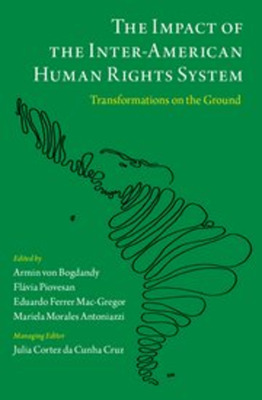
The Inter-American System of Human Rights (IASHR) is certainly a source of innovation in human rights law and policy. However, uncertainty reigns over its true legal, political, and social effects as many decisions face serious problems of compliance. To better grasp the System's effects, this book broadens the focus from compliance to impact as the key criterion of effectiveness. Thus, The Impact of the Inter-American Human Rights System: Transformations on the Ground can reveal the IASHR's deep and multifaceted effects, not least by embedding a common law of human rights.
Outlining the IASHR's historic path and contemporary practice, this book shows legal, political, and social effects with respect to the main problems that trouble the Americas. Though most of these certainly continue to exist, the System is having a transformative impact on them on the ground, though with huge differences between issues and countries. These achievements as well as the variations should be of interest to academics, judges, and policymakers in Latin America as well as other regions undergoing similar stress, such as Central and Eastern Europe or Africa.
The Impact of the Inter-American Human Rights System brings together leading scholars in international and constitutional law, social sciences, and international relations to present a systematic and critical analysis of the impact of the IASHR in the various fields of its activity. These include issues of internal conflicts, transition to democracy, rights of vulnerable groups, social rights, the environment, digital rights, and the accountability of private actors. The book also offers evidence-based proposals to further enhance the transformative impact of the Inter-American System that could be taken up by courts and policymakers at the national, Inter-American, and global levels.
-
Susan Franck
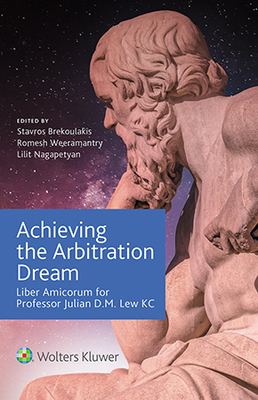
Achieving the Arbitration Dream is a compendium of high-quality contributions providing valuable perspectives and extensive analyses by preeminent arbitration professionals and scholars on a wide range of cutting-edge topics in the field of law, of which Julian Lew is a leader, and in which he remains an outstanding arbitrator and teacher. This exceptional book is a celebration of the multi-faceted legacy of a key figure in the evolution of international arbitration.
-
Susan Franck
Empirical research into investment treaty conflict is simultaneously promising and potentially perilous. This chapter identifies both its costs and benefits while striving to provide a clear set of guidelines for quality research in an effort to identify the potential uses and abuses of empiricism in international investment law. Empirical research is not immune from the polarization within the field, but certain steps can ensure that empirical work is not influenced by narrow or ideological perspectives. First, we need to understand norms of quality social science to enable a data-driven, rather than emotive, conversation. Second, we need to create time and space for balanced contemplation that cuts across ideological groupings – rather than having conferences and events attended by one selected segment – and ensuring that alternative perspectives are welcomed. Third, we need to work on developing empathic dialogue to engage productively about empirical research and normative reform, including focusing upon aspects that are valuable and those that require development. The objective should be to organize conversations about international investment law around data to engage productively, so that reason and intuition can interact to create solutions that are constructive and sustainable for the longer term.
-
Fernanda Giorgia Nicola Dr. and Jeffrey Miller
This chapter grapples with the absence of the concept of racial capitalism in European constitutionalism in spite of centuries of racial subordination in European colonies abroad and discrimination towards ethnic minorities at home. The rise of the European Economic Community in the late 1950s is often portrayed by scholars as a means to correct the legacies of racial and gender subordination that culminated with the Holocaust and the Second World War. Purportedly, the European Community seized the opportunity to start anew with a modernist and quasi-federal constitutional project inspired by the United States and its progressive Warren Court. However, by bracketing the dark sides of US federalism and building bridges across the Atlantic to construct European constitutionalism, prominent scholars such as Eric Stein, Mauro Cappelletti, and Joseph H. Weiler dismissed how the jurisprudence of the US Supreme Court over time protected the legal entitlements of slaveowners, businesses, and states at the expense of slaves, workers, women, and children. This selective reception of US constitutionalism, which portrayed law only as a tool of emancipation rather than oppression, has obscured the embeddedness of racial capitalism in the European political economy.
-
Roger Fairfax
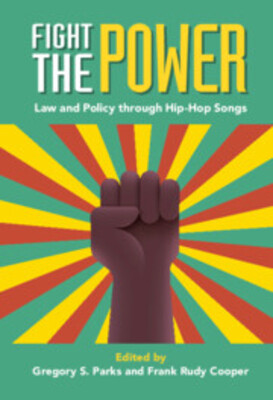
Roger Fairfax analyzes LL Cool J’s 1990 song, “Illegal Search,” as a precursor to later hip-hop critiques of policing. This song represented LL Cool J’s awakening to social consciousness in the 1990s. “Illegal Search” represented helped advance a narrative about policing that remains prominent in hip-hop to this day. “Illegal Search” might have been overlooked completely since the only track to follow is “Power of God,” a low-energy, spiritual offering that, while delivering a positive message, is perhaps the least familiar of the fourteen cuts on the album.“Illegal Search” surveys a number of discrete topics, including racial profiling, the manufacture and planting of evidence, police brutality, incarceration, and even seems to reference a specific case of police misconduct in New Jersey. The lyrics display the angst experienced by many African Americans who are subjected to law enforcement scrutiny simply because of their skin color. “Illegal Search,” with its literal, unobscured narrative, gives descriptive voice to the phenomenon we would later term “Driving While Black.”
-
Chiara Giorgetti and Mark Pollack
This introduction reviews scholarship on international legal fragmentation, lays out a framework for understanding international judicial cross-fertilization, and previews the contributions and their findings. Existing scholarship on international legal fragmentation, we argue, has moved through three phases over the past several decades. In the first, legal scholars and practitioners reacted with alarm to the judicial proliferation of the post–Cold War years, which they feared would create overlapping jurisdiction and conflicting interpretations of law. Following this period, the new century saw the pendulum swing toward a second, more optimistic picture in which international courts addressed fragmentation through “management” techniques, producing unity in international law. We can detect the opening salvos of a third wave, as skeptics have questioned the management account, pointing to the mixed motives of international judges and the limits of cross-fertilization. In this volume, we build on the existing literature by theorizing the actors of cross-fertilization and their motives, and by distinguishing between procedural and substantive cross-fertilization.
-
Rebecca Hamilton
-
Jeffrey Lubbers
In the United States, while the practice of medicine itself is regulated by the individual states, federal administrative agencies play a crucial role in the promulgation and implementation of national health policy, and the provision of health insurance and disability benefits. This chapter discusses the activities of these agencies and the limitations on them as imposed by administrative law. It provides a general overview of federal administrative law, and then a more detailed look at how these principles are applied (or differ) in the key federal health-related agencies, primarily the Department of Health and Human Services and its many important agencies such as the Food and Drug Administration, the Centers for Medicare and Medicaid Services, the Centers for Disease Control and Prevention, and the National Institutes of Health. It also covers the activities of the Social Security Administration and benefit programs in the Departments of Labor and Veterans Affairs.
-
Maya Manian
This chapter of FEMINIST JUDGMENTS: REWRITTEN HEALTH LAW OPINIONS (Seema Mohapatra and Lindsay F. Wiley, eds., forthcoming 2021) provides commentary on Leslie Griffin’s rewritten majority opinion in Means v. United States Conference of Catholic Bishops, 836 F.3d 643 (6th Cir. 2016). This commentary chapter complements the rewritten opinion, providing background material, analysis of the feminist judgment, and reflections on the implications of the feminist judgment for health law. Tamesha Means was eighteen weeks pregnant when she rushed to her local hospital suffering from a miscarriage. Similar to many women living outside of major metropolitan areas, the only hospital within a reasonable distance of Means’ residence was a Catholic-owned hospital which Means alleged mistreated her. Despite evidence that Means endured mistreatment as a result of Catholic entities’ health care directives, federal courts dismissed Means’ lawsuit against the religious entities. Leslie Griffin’s rewritten opinion brings a feminist perspective to bear on the broader problem of increasingly widespread assertions that objections based on “conscience” entitle health care providers to depart from appropriate standards of medical care and impose harms on vulnerable third parties. The feminist revision of Means not only exposes the inequitable impact on patient well-being of sectarian institutions’ medical care restrictions, but also insists that the law more broadly must safeguard the health of patients. While religious freedom remains an important principle, Griffin’s feminist judgment underscores that in any health care setting, freedom of conscience does not justify exemptions from legal and ethical standards of medical care that would inflict harm on unwitting patients.
-
Jamie Abrams
Feminism has had a broad influence in legal education. Feminist critiques have challenged the substance of legal rules, the methods of law teaching, and the culture of legal education. Following decades of advocacy, feminist pedagogical reforms have generated new fields, new courses, new laws, new leaders, and new feminist spaces. There are many reasons to celebrate the accomplishments of our feminist pioneers and champions. Yet, COVID-19 has also exposed all the vulnerabilities and tenuousness of feminist gains too. Critical work remains for faculty, administrators, and students to carry the work forward with a vigilant purpose and determination.
-
Padideh Ala'i
with Katayoon Beshkardana
-
Jonathan Baker
in David S. Evans, Allan Fels & Catherine Tucker, eds., The Evolution of Antitrust in the Digital Era: Essays on Competition Policy, 2021, vol. 2, pp. 11-19
-
Susan Carle
This is the third volume in a trilogy on gender issues in legal occupations. An overview of Women in the World ’ s Legal Professions (Schultz and Shaw 2003) was followed by Gender and Judging (Schultz and Shaw 2013), finally to be completed by this study on women teachers of law. All three books have been published by Hart Publishing, to whom we are grateful for their unceasing support over so many years. Our thanks also go to the International Institute for the Sociology of Law for facilitating the inclusion of all three volumes in their O ñ ati Socio-Legal Series.
-
Susan D. Carle
Article Abstract
The article explores the uses in anti-discrimination law of social neuroscience—a broad interdisciplinary field that draws on the insights of brain science, medicine, epidemiology, social psychology, behavioral economics, moral cognitive neuroscience and many other experimentally based disciplines. It discusses the promising uses of social neuroscience findings from all these subfields on such matters as the irrational biases of “fast” thinking processes in general, and implicit biases against “out” groups more specifically, as well as group conformity, the black sheep effect, and more. The article traces a few of the ways these insights can help inform anti-discrimination law in both particular cases and in reform of law-related policies, rules, structures and systems more generally. Social neuroscience, for example, exposes the typical fallacy of demanding proof of intentional discrimination in most cases, and exposes the problems in using other doctrines that make discrimination and retaliation claims unduly hard to prove. Social neuroscience findings about the social pain of exclusion and the ongoing physical and social harm of discrimination further show that the damages caused by illegal discrimination are far greater than the restitution courts typically impose on respondents. Finally, social neuroscience and other science-related disciplines, in consilience with political theory, philosophy, and legal history and theory, support the recognition of a broader human right to “act differently,” subject to the rights of others not to encounter harm.
Finally, this article examines the potential ethical pitfalls of using social neuroscience in the numerous ways proposed above. It concludes that neuroscience should not be used in individual cases to establish unconscious but “intentional” discrimination by particular individuals, and that social reform crusaders should be reflective about the potential irrationalities of their own biases and moral tastes as they go about attempting to transform law by drawing on their interpretations of brain-based science. Such reform campaigns will necessarily require invoking political process that depend on resorting to moral emotions, values, rhetoric, and potentially overly simplistic or reductionist glosses on more complex and qualified ideas. Thus even social crusaders who aim to make the world a better place must retain skepticism and an ethic of restraint in insisting on their viewpoints as to the arrangements that could leader to a more moral and less discriminatory world.
-
Susan D. Carle
-
Janie A. Chuang
Since the international community adopted the UN Trafficking Protocol nearly two decades ago, our approach to the problem of human trafficking has shifted significantly. With too few traffickers prosecuted and too few victims protected, there is growing recognition of the need for more robust efforts to prevent trafficking in the first instance. Trafficking is not simply the product of deviant, criminal behavior that once rooted out, can be easily eliminated. Also to blame are deeply embedded societal structures that facilitate, and even reward, exploitation – in particular, weak labor and migration frameworks that perpetuate precarity for migrant workers in their search for economic opportunities. Because worker exploitation and trafficking differ in degree, not in kind, addressing worker exploitation more broadly can help prevent the abuses from escalating into trafficking. This Chapter explores how emerging global governance over labor migration – with the recently-adopted UN Global Compact for Safe, Orderly, and Regular Migration and the now-elevated role of the International Organization for Migration – could play a role in preventing human trafficking.
-
Robert Dinerstein
For those seeking to understand the complexities of responding to digital accessibility legal issues, this digest is designed to be of use to newcomers to digital accessibility, as well as seasoned veterans of the field.
-
Roger A. Fairfax
Chapter Abstract: The authority of the prosecutor to file charges is broad but not plenary. Legal systems create various mechanisms to test the quality of the evidence supporting the charges that the prosecutor files. This chapter describes and evaluates those mechanisms, including review of charges by judges, popular review of charges by grand juries and trial juries, and reconsideration of charges by prosecutors themselves. The intensity of the review of charges varies at different stages of the proceedings. The chapter compares the review available at the point of warranted arrest, warrantless arrest, grand jury, probable cause hearing, preliminary hearing, motion to dismiss, motion to suppress evidence, jury trial, bench trial, motion for judgment of acquittal, motion for new trial, appellate review of evidentiary sufficiency, and collateral proceedings.
-
Christine Farley
-
Christine Farley
-
Jeffrey Lubbers
-
Fernanda Nicola
Book Description: At the beginning of 2015, the Court of Justice opened its archives, which created a new and challenging primary source for those studying the Court of Justice: the dossiers de procédure which contain much more than the contemporary documents published by the Court. This volume includes five chapters which analyse the activities of the Court of Justice from a highly diverse range of non-doctrinal perspectives. However, they also highlight significant new developments at the Court itself which attract attention and deserve analysis. Thus, the idea behind this volume is to make available new tools and approaches through which the activities of the Court of Justice can be studied. It shows a more intense engagement with scholars across disciplines to reflect on law and courts, with the Court of Justice as a central focus, and new methods (such as network citation analysis) and sources (such as the Court's archives) being discovered and developed. It also shows a more intense and deeply knowledgeable engagement with EU law and the Court of Justice by non-legal scholars, such as the new sociologies and histories of the Court of Justice. These and other new approaches have spawned productive and ongoing conversations across disciplines.
-
Jenny Roberts
-
Ann Shalleck
This book examines the roles played by narrative and culture in the construction of legal cases and their resolution. It is articulated in two parts. Part I recalls epistemological turns in legal thinking as it moves from theory to practice in order to show how facts are constructed within the legal process. By combining interdisciplinary paradigms and methods, the work analyses the evolution of facts from their expression by the client to their translation within the lawyer-client relationship and the subsequent decision of the judge, focusing on the dynamic activity of narrative construction among the key actors: client, lawyer and judge. Part II expands the scientific framework toward a law-and-culture-oriented perspective, illustrating how legal stories come about in the fabric of the authentic dimensions of everyday life. The book stresses the capacity of laypeople, who in this activity are equated with clients, to shape the law, dealing not just with formal rules, but also with implicit or customary rules, in given contexts. By including the illustration of cases concerning vulnerable clients, it lays the foundations for developing a socio-clinical research programme, whose aims including enabling lay and expert actors to meet for the purposes of improving forms of collective narrations and generating more just legal systems.
Printing is not supported at the primary Gallery Thumbnail page. Please first navigate to a specific Image before printing.