-
Jamie Abrams, Linda D. Elrod, and J. Thomas Oldham
The Ninth Edition of this popular and manageably sized casebook retains the general structure of the prior edition, with its emphasis on practical skills, comparative material, and diverse geographic coverage. This edition features transformative updates in the field, such as Dobbs v. Jackson Women’s Health Org., the 2017 Uniform Parentage Act, systemic critiques of the child welfare system, the Uniform Cohabitants’ Economic Remedies Act, and the regulation of assisted reproductive technologies.
The goal of this edition is to meet the needs of students preparing for the evolving practice of family law. Problems reflect current, diverse, and pluralistic family formation grounded squarely in supporting students acquiring “bread and butter” lawyering skills. The text invites students to consider the various skills now needed by a family law attorney, the emotional landscape facing many clients, the differing roles lawyers can play, the cultural competencies needed for practice, and the diverse skills needed to practice family law. These revisions support the trajectory shift toward professional-identity-formation in legal education and NextGen Bar.
-
Jamie Abrams, Daniela Kraiem, and Anibal Rosario Lebron
Gender and the Law is the new title for our long-running Women and the Law publication. Gender and the Law provides timely coverage highlighting the most pressing legal questions in the realm of gender and law. Assembled by a team of expert editors, this work collects the best research addressing legal issues affecting women, the law and masculinities, gender identity and expression, and sexuality published within the last year.
With timely coverage from top legal scholars of both “hot” topics and legal questions with a long history, this text allows practitioners to quickly get up to date and identify trends in a broad range of fields in this fast-changing area of the law Articles explore the relationship between gender and the following areas of law.
-
Walter Effross
Keeping Your Own Counsel: Simple Strategies and Secrets for Success in Law School, by Professor Walter A. Effross, is a unique toolkit of practical systems, schedules, and scores of (sometimes-surprising) suggestions, to help students distinguish themselves in the classroom, the exam room, and the interview room.
Drawing on the author’s seven years of big-firm practice and quarter-century of full-time law teaching, the book provides encouraging and immediately-usable methods to support students throughout their law school careers, starting well before the first day of classes. Keeping Your Own Counsel includes structures for mastering information, maximizing efficiency, minimizing stress, and building a portfolio of publications.
-
Roger Fairfax, Bennett Capers, and Eric Miller
-
Chiara Giorgetti
International claims commissions (ICCs) are unique dispute resolution mechanisms designed to be highly flexible and responsive to international crises. This timely Research Handbook explores the history of ICCs, how and why states create them, and the role of states and secretariats within them.
Written by accomplished experts and past claims commission members to present a unique perspective on ICCs, this Research Handbook analyses past claims commissions including the Iran–US Claims Tribunal, the UN Compensation Commission, the Eritrea–Ethiopia Claims Commission and the Commission for Real Property Claims in Bosnia. Providing a comprehensive review of institutional design issues, this Handbook examines the challenges associated with mass claims processes, diplomatic protection, domestic liability, and enforcement, as well as how to address them. Looking ahead to the future, the contributing authors propose innovative ways in which claims commissions could be used to address contemporary challenges such as the Russian invasion of Ukraine, the construction of the wall in Occupied Palestinian Territory, climate change and environmental law disputes.
This thought-provoking Research Handbook will be a fundamental research resource for scholars and students of public international law and international dispute resolution. It will also provide practical advice for international arbitration experts, policy makers, and officials in international organisations.
-
Ira P. Robbins
Discusses the standards developed by the courts, together with pertinent statutes and leading case law for every jurisdiction. Examines the law's historical development and the current law. Also addresses the departures from previous law and practice. Analyzes habeas corpus themes, patterns, and directions for current and future litigation. This guide provides the actual language of the court with complete citations to aid in further research.
-
Ira P. Robbins
Prisoners and the Law focuses on legal issues commonly affecting the prison population, including AIDS, drugs, overcrowding, security, appeals, weapons, correspondence, visitation issues, and prisoner safety. In-depth articles, written by leading authorities, cover topics such as:
• The future of prison reform
• Restitution
• Proposals for a new correctional system
• Inmate welfare funds
• Prisoner, prison, probation, and parole statistics
• Incisive articles, written by some of the nation's leading authorities, on the development and present status of this evolving area of law
• The most recent changes and developments in the field
Use this title as a resource for issues relating to private incarceration, disenfranchisement of ex-felons, deaf prisoners' rights, and other legal challenges. Statistics on prisoners, prisons, probation, and parole are included.
-
David Snyder and Susan A. Maslow
With burgeoning legislation, investor pressure, and consumer demand, responsible and sustainable supply chains are a high priority. This practical and comprehensive guide is essential for all businesses and counsel who want to reduce adverse human rights impacts and environmental risks in their supply chains. The panel of authors, including leading practitioners and prominent scholars, has come together to build an effective and balanced structure to protect the environment and the human rights of workers.
Containing the Model Contract Clauses (MCCs) from the ABA Business Law Section's working group, this unique book is much more than an explanation of model contract clauses. It is a tool that will help companies and their counsel implement healthy corporate policies in a way that is legally effective and operationally likely and can help reduce disruption in the supply chain.
The book is divided into three sections: MCCs, legal analysis, and practical perspectives. It includes:
- MCCs and explanatory annotations so counsel can make informed decisions
- An overview of the MCCs: their genesis and development, strategies and choices, legal underpinnings and drafting alternatives, current use, and likely future
- Perspectives of authors from large and small law firms, in-house counsel, academia, NGOs, civil society, and labor
- Chapters on legal issues from antitrust, commercial law, and corporate law to US international trade law as well as foreign law that reaches US companies
-
David Spratt and Ben Templin
Contracts: A Modern Coursebook, Third Edition has the highest professor satisfaction rate (83% compared to an average of 54%) according to a survey of the leading contracts casebooks. The reasons are simple. Applying best practices in learning theory and textbook design, Contracts: A Modern Coursebook engages students and builds critical thinking skills faster and more efficiently.
Each chapter begins with Learning Objectives to give students focus. To build foundational knowledge, the coursebook then thoroughly explains the law with real world examples. Test Yourself problems let students assess themselves. Students then read topical and timely case law, which has prompts to encourage reflective thinking. Each chapter ends with Questions for Review (to assess whether students understand the concepts) and a Problem Solving & Analysis section that builds critical thinking and analytical skills. Professors report a more dynamic and engaged classroom as a result.
-
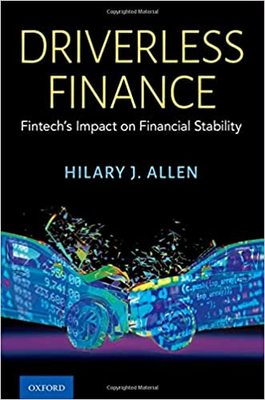
Hilary Allen
Everyone is talking about fintech, and they’re usually saying good things. Driverless Finance provides a balance to that conversation, exploring the threats that different fintech innovations pose for our financial system. With in-depth and accessible descriptions of new financial technologies and business models—ranging from distributed ledgers to machine learning, cryptoassets to robo-investing—this book helps readers to think more critically about fintech, and about how the law should respond to it.
This book highlights the increased speed, complexity, and coordination inherent in new fintech innovations, and illustrates how these features could come together in a massive financial system failure. It makes the case for a precautionary approach to regulating fintech, erring on the side of caution to avoid a financial crisis that could have irreversible and catastrophic effects for our society. Because neither longstanding regulatory approaches nor experimental new approaches like regulatory sandboxes were designed to address fintech's systemic risks, this book makes several bold new proposals for regulation designed to make fintech-inspired financial crises less likely. These proposals include new forms of disclosure and supervision, new forms of technological tools (known as suptech), and a new licensing regime for financial technologies. This book finishes by situating its discussion of fintech and financial stability in the context of important debates about innovation, expertise, cybersecurity, privacy, competition, and other pressing issues.
-
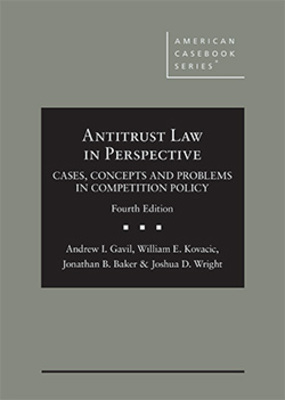
Jonathan Baker
The Fourth Edition of Antitrust Law in Perspective has been thoroughly refreshed with new cases, new, revised, and updated Notes and Sidebars, some new Problems, and added content to help facilitate class discussion of the competition challenges of digital markets. New principal cases include NCAA v. Alston, Ohio v. American Express, Apple v. Pepper, and United States v. AT&T, all of which are accompanied by in-depth legal and economic analysis and thought-provoking queries to introduce students to the complex issues they pose. In addition, many new cases are cited and important recent commentary is noted. The authors have also streamlined and restructured some of the Notes and Sidebars, a unique feature of the book, to make them more accessible to students and easier for adopters to select the material they would like to assign and emphasize.
The Fourth Edition also includes a new feature, four “Policy Exchanges” on topics including whether antitrust should be part of the policy arsenal to challenge wealth inequality, error cost analysis, the continued vitality of the Philadelphia National Bank presumption for mergers, and the propriety of procompetitive presumptions associated with vertical restraints. These “point-counterpoint” readings supplement the cases and provide discrete opportunities to explore some of the most contentious issues facing antitrust policy today. The book also includes two new digital market-focused case studies to Chapters 1 and 5, respectively, to introduce basic concepts of collusion and exclusion and the increasingly important role of potential competition analysis.
The authors are acutely aware that the field of antitrust law may be at an inflection point. The body of law reflected in the book is largely the product of a generation of evolution that, until recently, seemed stable and well-accepted, but it may now be facing a crucial test. As always, the authors are committed to monitoring developments and supplementing the material in the book as needed to keep adopters and their students abreast of new cases and potential reforms. -
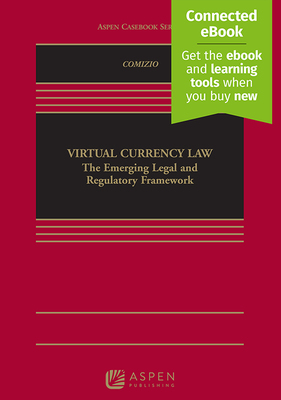
V. Gerard Comizio
Virtual Currency Law: The Emerging Legal and Regulatory Framework by V. Gerard Comizio is one of the first casebooks to explore the emerging legal and regulatory framework governing virtual currency activities under a wide range of federal and state laws, including securities, banking, commodities, money transmission, payments systems, commercial, anti-money laundering, fintech, cyber and data security, tax, Constitutional and international laws.
Virtual Currency Law is one of the first books specifically suited for use in a law school course exploring the emerging legal and regulatory framework governing virtual currency activities. Since the advent of the first virtual currency (Bitcoin) in 2008, a new global financial ecosystem has emerged, composed of an increasing number and variety of digital assets. In this context, the book explores how governments, regulators and legal experts are increasingly looking to existing securities, banking, commodities, money transmission, payment systems, commercial, anti-money laundering, fintech, cyber and data security, tax, Constitutional and international laws to address the unique, novel, and complex issues presented by virtual currency. The book also explores how the ubiquitous nature of virtual currency has led to it being viewed as the legal and regulatory equivalent of a wide range of traditional corporate and financial services products, services, activities, and investments.
-
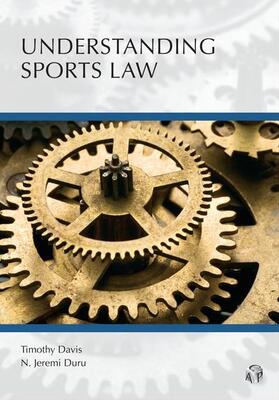
N. Jeremi Duru and Timothy Davis
Understanding Sports Law provides a comprehensive overview of the legal issues and concepts that emerge from relationships existing within American sport. It captures the legal doctrine and rules arising from judicial decisions, state and federal legislation, and the private law created by associations and other sport entities. In doing so, Understanding Sports Law examines a vast array of different substantive areas of law as applied in the sports context. These include contracts, torts, intellectual property, antitrust, labor law and constitutional law.
While this treatise's primary focus is on articulating the current legal principles governing relationships in sport, it often discusses the historical evolution of such rules in order to contextualize and foster an understanding of today's controlling principles. It also guides the reader through legal and regulatory developments shaping the future of the sports industry, such as name, image, and likeness marketing opportunities for collegiate athletes and race and gender equity movements across the sports landscape.
This treatise can serve as a helpful companion to a casebook or as a stand-alone resource and will prove useful for law students, law professors, and practitioners alike.
-
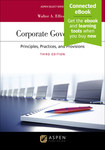
Walter Effross
Corporate Governance examines in an extraordinarily practical and accessible way the legal concerns of today’s shareholders, stakeholders, directors, officers, and their counsel, with a special emphasis on drafting documents and developing procedures to anticipate and prevent problems.
Designed for real-world application by students, practitioners, executives, investors, and activists, the text includes excerpts from only the most important judicial decisions. Extensive notes and analyses provide context from courts, commentators, institutional investors, proxy advisors, stock exchange requirements, and businesspeople. Dozens of examples “ripped from the headlines,” or taken from corporate documents, the “Great Books,” or pop culture illustrate and illuminate key principles. Appendices offer detailed information to establish, support, and advance the reader’s career in corporate governance practice.
-
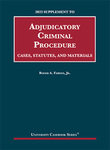
Roger Fairfax
This supplement brings the principal text current with recent developments in the law.
-
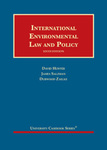
David Hunter
This comprehensive, multidisciplinary casebook analyzes all aspects of international environmental law and policy, including the major environmental treaty regimes, customary law principles and the development and evolution of soft law norms. It has been widely adopted in the field for over two decades. Written in a user-friendly fashion with problem exercises and a Teacher's Manual, it emphasizes the dynamic nature of the law-making process, including global environmental diplomacy and the critical role of non-state actors, including scientists, NGOs, and business. Getting to the heart of pressing environmental challenges, it explains not just the law but also the relevant politics, economics, and science.
This sixth edition of the book reflects major new developments such as the development of rules to implement the Paris Agreement, the evolution of the Montreal Protocol ozone treaty into an explicit climate treaty, the emergence of successful human-rights litigation to address climate change, the withdrawal of Japan from the Whaling Convention, the U.S.-Mexico-Canada Trade Agreement, and the increasing concern over plastic pollution, to name just a few. -
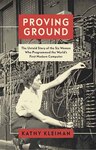
Kathryn Kleiman
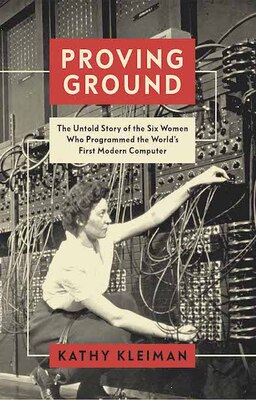
As the Cold War began, America’s race for tech supremacy was taking off. Experts rushed to complete the top-secret computing research started during World War II, among them six gifted mathematicians: a patriotic Quaker, a Jewish bookworm, a Yugoslav genius, a native Gaelic speaker, a sophomore from the Bronx, and a farmer’s daughter from Missouri. Their mission? Programming the world’s first and only supercomputer—before any code or programming languages existed.
These pioneers triumphed against sexist attitudes and huge technical challenges to invent computer programming, yet their monumental contribution has never been recognised—until now. Over a decade, Kathy Kleiman met with four of the original six ENIAC Programmers and recorded their stories. Here, with a light touch and a serious mind, she exposes the deliberate erasure of their achievements and restores the women to their rightful place as revolutionaries, bringing to life their camaraderie, their determination, and their rapidly changing world.
As big tech struggles with gender inequality and momentum builds in restoring women to history, the time has come for this engrossing story to be uncovered and celebrated.
-
Jamie Abrams
Feminism has had a broad influence in legal education. Feminist critiques have challenged the substance of legal rules, the methods of law teaching, and the culture of legal education. Following decades of advocacy, feminist pedagogical reforms have generated new fields, new courses, new laws, new leaders, and new feminist spaces. There are many reasons to celebrate the accomplishments of our feminist pioneers and champions. Yet, COVID-19 has also exposed all the vulnerabilities and tenuousness of feminist gains too. Critical work remains for faculty, administrators, and students to carry the work forward with a vigilant purpose and determination.
-
Angela J. Davis
From the Publisher: Basic Criminal Procedure is a clear and comprehensive outline of the most important principles and issues taught in the basic Criminal Procedure law school course. It covers the 4th, 5th, and 6th Amendments, including Exceptions to the Warrant requirement, Remedies for 4th Amendment violations, the Privilege Against Self-Incrimination, Limits on Identification Evidence and the Right to Counsel. Basic Criminal Procedure also provides sample examination questions and answers.
-
Roger Fairfax
This supplement brings the principal text current with recent developments in the law.
-
Amanda Frost
ABOUT YOU ARE NOT AMERICAN
Citizenship is invaluable, yet our status as citizens is always at risk—even for those born on US soil.
Over the last two centuries, the US government has revoked citizenship to cast out its unwanted, suppress dissent, and deny civil rights to all considered “un-American”—whether due to their race, ethnicity, marriage partner, or beliefs. Drawing on the narratives of those who have struggled to be treated as full members of “We the People,” law professor Amanda Frost exposes a hidden history of discrimination and xenophobia that continues to this day.
The Supreme Court’s rejection of Black citizenship in Dred Scott was among the first and most notorious examples of citizenship stripping, but the phenomenon did not end there. Women who married noncitizens, persecuted racial groups, labor leaders, and political activists were all denied their citizenship, and sometimes deported, by a government that wanted to redefine the meaning of “American.” Today, US citizens living near the southern border are regularly denied passports, thousands are detained and deported by mistake, and the Trump administration is investigating the citizenship of 700,000 naturalized citizens. Even elected leaders such as Barack Obama and Kamala Harris are not immune from false claims that they are not citizens eligible to hold office.
You Are Not American grapples with what it means to be American and the issues surrounding membership, identity, belonging, and exclusion that still occupy and divide the nation in the twenty-first century. -
Lewis Grossman
From the Publisher:
A comprehensive history of the concept of freedom of therapeutic choice in the United States that presents a compelling look at how persistent but evolving notions of a right to therapeutic choice have affected American policy and law from the Revolution through the Trump Era.
Throughout American history, lawmakers have limited the range of treatments available to patients, often with the backing of the medical establishment. The country's history is also, however, brimming with social movements that have condemned such restrictions as violations of fundamental American liberties. This fierce conflict is one of the defining features of the social history of medicine in the United States.
In Choose Your Medicine, Lewis A. Grossman presents a compelling look at how persistent but evolving notions of a right to therapeutic choice have affected American health policy, law, and regulation from the Revolution through the Trump Era. Grossman grounds his analysis in historical examples ranging from unschooled supporters of botanical medicine in the early nineteenth century to sophisticated cancer patient advocacy groups in the twenty-first. He vividly describes how activists and lawyers have resisted a wide variety of legal constraints on therapeutic choice, including medical licensing statutes, FDA limitations on unapproved drugs and alternative remedies, abortion restrictions, and prohibitions against medical marijuana and physician-assisted suicide. Grossman also considers the relationship between these campaigns for desired treatments and widespread opposition to state-compelled health measures such as vaccines and face masks.
From the streets of San Francisco to the US Supreme Court, Choose Your Medicine examines an underexplored theme of American history, politics, and law that is more relevant today than ever. -
Heather Hughes, G. Eric Brunstad Jr., and James J. White
This book covers comprehensively both the basics of secured transactions under UCC Article Nine and some of the most complex modern transactions such as “repos” and “securitizations.” To offset the complexities of the subject matter, this text is extremely user-friendly. Every chapter has ample introductory material to help the student get oriented. This manageably sized book is organized by transaction (e.g., loans on equipment, on inventory, etc.), rather than by code section (e.g., attachment, perfection, etc.), so that students can see how various transactions develop, rather than learning about sections of the code out of context. A course on Article Nine offers the opportunity for the student to acquire an extensive and vitally important commercial law vocabulary, and this book maximizes that opportunity. In addition to extensively revising all of the former chapters, this edition includes new materials on practice skills, on international secured transactions, and on emerging technologies. It includes a revised and re-situated chapter on the history of secured transactions, followed by a revised, cutting-edge concluding chapter on the theory of Article Nine. The book tracks modern curricular trends, including increased interest in courses on (i) legislation and more detailed consideration of methods of statutory interpretation, and (ii) practice skills such as reviewing contracts and preparing closing opinion letters. Finally, the new edition concisely presents blockchain technology and how it implicates secured transactions and UCC Article Nine.
-
Cynthia E. Jones
The January 2021 Capitol Hill riots, the summer 2020 Black Lives Matter protests, the killings of George Floyd and Breonna Taylor, the wave of state and local reforms to policing powers, and increasingly pervasive use of technology in criminal investigations are the contemporary national issues that are captured in the Sixth Edition of Constitutional Criminal Procedure.
The Sixth Edition offers maximum pedagogical freedom to craft an exciting course using seminal U.S. Supreme Court cases, sample court documents, illuminating graphics, and problem-solving opportunities throughout a text that maintains its relevance and user-friendly structure for new and old adopters alike. It excerpts cutting-edge law review articles, emergent social science research, and interdisciplinary essays, as well as infusing insights from respected legal experts and other significant 21st century voices.
The Sixth Edition also presents an exciting new co-author collaboration between former federal prosecutor, Professor Lenese C. Herbert of Howard University School of Law, and Professor Cynthia E. Jones of the American University Washington College of Law, who worked as a trial attorney at the Public Defender Service for the District of Columbia and later became the agency director. Both experienced law professors, Professors Herbert and Jones have made effective use of their “across-the-aisle” collaboration in the Sixth Edition of Constitutional Criminal Procedure.
Printing is not supported at the primary Gallery Thumbnail page. Please first navigate to a specific Image before printing.