
-
Jamie Abrams
Description: Law School Legends on Torts is a series of recorded modules that support novice learners and lawyers as they cultivate, reinforce, and refine their Torts knowledge. Strengthen your retention and mastery of intentional torts, negligence, strict liability, products liability, and survival and wrongful death. Use these modules to introduce topics foundationally, review content, or emphasize key concepts in an accessible, engaging, and flexible modality.
-
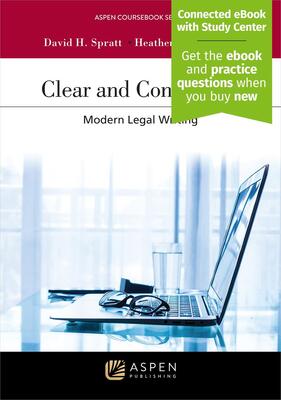
Heather Ridenour and David Spratt
The authors' building-block approach introduces legal writing skills in stages, beginning with foundational concepts and progressing to more complex forms of analysis and advocacy in both objective and persuasive legal writing. A modular organization of topics by chapter offers optimal versatility for teaching and course design. The comprehensive coverage in Clear and Convincing: Modern Legal Writing extends to legal research strategies, grammar, editing, oral argument, and professional development. Numerous examples and writing samples illustrate legal writing. Exercises throughout develop students' skills. Integrated coverage of digital research and generative AI in legal writing and practice prepares students to use these tools responsibly and ethically.
-
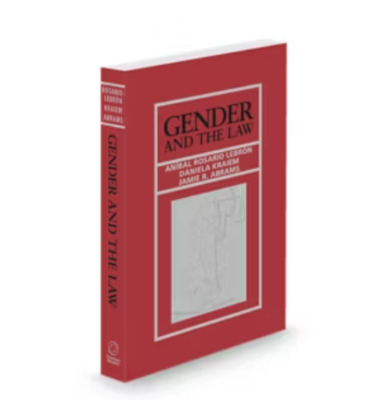
Jamie Abrams and Daniela Kraiem
Gender and the Law provides timely coverage highlighting the most pressing legal questions in the realm of gender and law. Assembled by a team of expert editors, this work collects the best research addressing legal issues affecting women, the law and masculinities, gender identity and expression, and sexuality published within the last year.
With timely coverage from top legal scholars of both “hot” topics and legal questions with a long history, this text allows practitioners to quickly get up to date and identify trends in a broad range of fields in this fast-changing area of the law.
Articles explore the relationship between gender and the following areas of law:- Discrimination (in employment, education, housing, and other areas)
- Family law
- Reproductive rights and justice
- Sexuality
- Sexual harassment and violence
- Intimate partner violence
- Regulation of new technologies
- Political economy and labor
- Sexual orientation
- Gender identity
- Environmental justice
- Education
- International law
- Social movements
- Legal theory
-
Jamie Abrams, Angi Porter, and Edward J. Kionka
Black Letter Outlines are designed to help law students and novice lawyers state clear legal rules, describe underlying tort principles, and apply those rules and principles to client representations and other real-world scenarios. Readers can use Black Letter Outlines as a study aid when preparing for classes, as a subject-matter review when studying for course or bar examinations, and as a convenient and easily-navigable refresher for the novice lawyer. Black Letter Outlines are written by experienced law school professors who are recognized national authorities in their subject area. New authors Abrams and Porter bring a niche expertise that combines their years of tort law practice experience with their classroom teaching experience and their added lenses of bar exam readiness instruction and inclusive pedagogy expertise. This Torts Outline particularly helps students see the major tort causes of action, developments and trajectory shifts in the field, and representative practice problems. It is a useful tool in helping aspiring Torts mavens at once see the big picture of Torts while also refining their precision in stating its rules and validating their knowledge by measuring content acquisition.
-
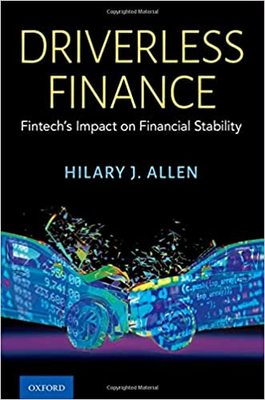
Hilary J. Allen
There’s a lot to worry about these days. Near the top of my list, though, is Silicon Valley’s slow-motion takeover of our financial system. You may have a very different ranking of worries, but Silicon Valley’s tentacles are most likely wrapping – if not fully wrapped – around the things that are near the top of your list. Those tentacles are only going to get harder to dislodge as Silicon Valley provides financial services to more and more Americans, with all the data, money, and power that come with that kind of business.
The Silicon Valley elite have been trying to “disrupt” finance for decades, and there’s increasing evidence that they’re succeeding. There’s also every reason to believe that if Silicon Valley does succeed, it will cock things up worse than Wall Street ever did. We can’t passively assume that the solutions Silicon Valley comes up with will make the world a better place – at least when it comes to finance, many of its solutions are deserving of the most withering skepticism and some of them should be outright banned. But that doesn’t mean we should remain content with the status quo. If we can resist the lure of shiny apps promising easy fixes, there are things we can do to make financial services work better for the American people.
There’s a lot to unpack there, so where do I start? Well I guess Washington DC, December 14, 2022 is as good a place and time as any…
-
Geoffrey S. Corn, Jimmy Gurulé, Jeffrey D. Kahn, Gary Corn, and Amy C. Gaudion
The third edition of our text remains true to the “mission statement” from our original text: “to offer students insights into the complex process of national security legal practice by focusing on essential legal sources and national security issues touching on the full spectrum of national security powers.” In a field of law that seems to expand continuously with new and complex issues blossoming, sometimes unexpectedly, choosing what to include is a genuine challenge. Our goal from the inception of this collective effort has remained constant in the face of this challenge: to offer students and professors a text that is both comprehensive and accessible. To that end, we have made some significant changes beyond updating information. First, we are excited that a new co-author, Amy Gaudion, has joined our team. Amy brings both experience and scholarly insight to our project. Substantively, our book has been refocused to reflect the latest legal and policy changes and is shorter in length. This was not accomplished by deleting important information. Instead, we carefully curated each chapter, transforming many case extracts into narrative summaries that provide important context for what we consider currently to be the essential cases. Second, we added a new version of Chapter 2, which outlines for students the national security decision-making structure and process, focused most logically on the executive branch. This should provide students with a better sense of how law, policy, and practice influence the formulation, execution, and critique of national security. Third, we included Chapter 6, another new chapter focused on unique challenges associated with responding to domestic emergencies. While the previous edition integrated this topic into domestic use of the armed forces, these are now two distinct chapters about it. Finally, we reorganized the text to progress from the criminal law- oriented response to national security threats to use of the military as a tool to protect national security. Chapter 1, “An Introduction to the ‘National Security’ Constitution,” continues to rely on a deep dive into a single case: Hamdi v. Rumsfeld, 542 U.S. 507 (2004). We contemplated using a more recent decision, but we remain convinced that analyzing the issues in this case, and the analysis reflected in its various opinions, is an ideal way to introduce the intersection of law and policy in this domain. This is intended to allow newcomers to the field to acquaint xxixxii Preface themselves, in an absorbable way, with some of the themes, techniques, institutions, sources of law, and (it must be said) some of the ubiquitous jargon common to the many facets of national security law. Part I remains centered on broad principles that transcend many more specific national security practice areas. We begin with the constitutional framework and the friction points built into it. Part I also addresses the relationship of international law to U.S. national security practice, as well as presenting a general overview of domestic emergency response authorities. The text then transitions to a more topical approach to national security law and practice, illustrating how law affects the leverage of criminal, informational, intelligence, military, and economic powers. The final chapter looks towards the future and considers how the digital age is affecting national security practice. We have written a casebook, not a treatise, and our choices reflect our aim to provide students with a serious introduction to a difficult subject—one that enlightens but does not overwhelm. We hope this text enables students to appreciate the challenge of responding to the many threats to national security in a way that aligns with our nation’s commitment to the high ideals of our Constitution and the rule of law. Now, more than ever, an understanding of the question at the heart of national security law—“how the interests of security and liberty are reconciled”—is crucially important.
-
Matthew S. Erie
China remains one of the top capital exporters in the world, yet there is a paucity of reliable sources through which to assess Chinese corporate decision-making, the implementation of Chinese-financed and managed projects, and the socio-economic effects of those projects. The Casebook fills this gap by providing fifteen case studies written by experts and researchers, many from host states and who have first-hand knowledge of the transaction or dispute in question. Case studies are written primarily based on primary source material including transactional documents, interviews with stakeholders, laws and regulations, and case decisions. Educators in professional schools, including law, policy, and business, will find in the Casebook material to supplement class discussions pertaining to Chinese overseas investment, Chinese investment strategies, and the nature of the Chinese firm. This title is also available as open access on Cambridge Core.
-
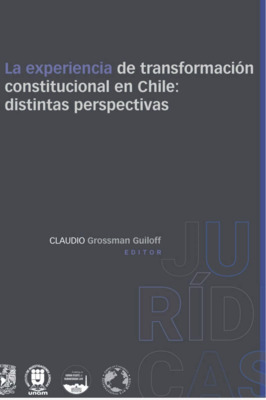
Claudio Grossman
La presente publicación reúne una serie de artículos que abordan, desde diferentes perspectivas, de autores chilenos como de otras nacionalidades, temas referidos a los procesos constituyentes que han sido objeto de debates en Chile durante los años 2021-2023.1 En un contexto regional caracterizado por constantes transformaciones sociales, políticas y económicas, los análisis incluidos en esta publicación son una contribución relevante para avanzar en la comprensión del rol del derecho constitucional, y su relación con el poder estatal, la democracia, los derechos fundamentales y la ciudadanía.
-
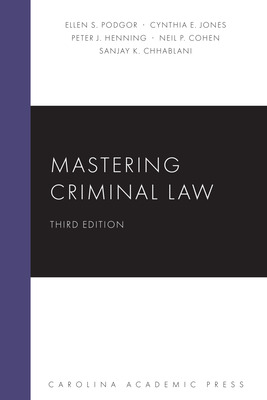
Cynthia E. Jones, Ellen S. Podgor, Peter J. Henning, Neil P. Cohen, and Sanjay K. Chhablani
Mastering Criminal Law explores the basic principles useful in the study of criminal law, offering real-world examples to understand these concepts. It provides a clear and concise consideration of the fundamental structure of a crime, including statutory interpretation and sentencing. It has chapters on the typical crimes covered in most criminal law casebooks, with updated materials on homicide, sexual assault, and property crimes. Additionally, it covers accomplice liability, solicitation, attempt, and conspiracy. It also covers defenses, including the right to present a defense and updated materials on insanity. It distinguishes different approaches, such as the Common Law and Model Penal Code, and provides examples of different state statutes.
-
Jeffrey Lubbers and Ronald M. Levin
This book offers a concise, knowledgeable guide to administrative law. In straightforward, readable prose, the authors not only summarize the dominant statutes and case law in the area, but also discuss informal administrative processes and the background realities of the regulatory state. Students can use the book as a complement to any major casebook, and practitioners will also find it an excellent brief introduction to this complex and important subject.
-
Angi Porter, Jamie Abrams, and Edward J. Kionka
Black Letter Outlines are designed to help law students and novice lawyers state clear legal rules, describe underlying tort principles, and apply those rules and principles to client representations and other real-world scenarios. Readers can use Black Letter Outlines as a study aid when preparing for classes, as a subject-matter review when studying for course or bar examinations, and as a convenient and easily-navigable refresher for the novice lawyer. Black Letter Outlines are written by experienced law school professors who are recognized national authorities in their subject area. New authors Abrams and Porter bring a niche expertise that combines their years of tort law practice experience with their classroom teaching experience and their added lenses of bar exam readiness instruction and inclusive pedagogy expertise. This Torts Outline particularly helps students see the major tort causes of action, developments and trajectory shifts in the field, and representative practice problems. It is a useful tool in helping aspiring Torts mavens at once see the big picture of Torts while also refining their precision in stating its rules and validating their knowledge by measuring content acquisition.
-
Ira P. Robbins
Prisoners and the Law focuses on legal issues commonly affecting the prison population, including AIDS, drugs, overcrowding, security, appeals, weapons, correspondence, visitation issues, and prisoner safety. In-depth articles, written by leading authorities, cover topics such as:
- The future of prison reform
- Restitution
- Proposals for a new correctional system
- Inmate welfare funds
- Prisoner, prison, probation, and parole statistics
- Incisive articles, written by some of the nation’s leading authorities, on the development and present status of this evolving area of law
- The most recent changes and developments in the field
Use this title as a resource for issues relating to private incarceration, disenfranchisement of ex-felons, deaf prisoners’ rights, and other legal challenges. Statistics on prisoners, prisons, probation, and parole are included.
-
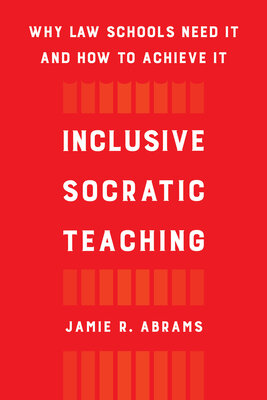
Jamie Abrams
For more than fifty years, scholars have documented and critiqued the marginalizing effects of the Socratic teaching techniques that dominate law school classrooms. In spite of this, law school budgets, staffing models, and course requirements still center Socratic classrooms as the curricular core of legal education. In this clear-eyed book, law professor Jamie R. Abrams catalogs both the harms of the Socratic method and the deteriorating well-being of modern law students and lawyers, concluding that there is nothing to lose and so much to gain by reimagining Socratic teaching. Recognizing that these traditional classrooms are still necessary sites to fortify and catalyze other innovations and values in legal education, Inclusive Socratic Teaching provides concrete tips and strategies to dismantle the autocratic power and inequality that so often characterize these classrooms. A galvanizing call to action, this hands-on guide equips educators and administrators with an inclusive teaching model that reframes the Socratic classroom around teaching techniques that are student centered, skills centered, client centered, and community centered.
-
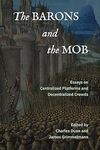
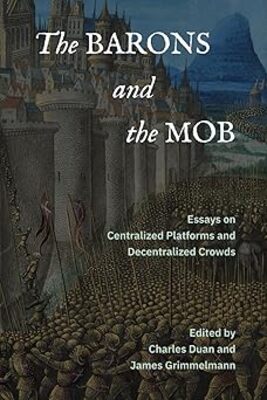
Charles Duan and James Grimmelmann
There are two unprecedented sources of power on the Internet today: centralized platforms and decentralized crowds. They feed off each other, but also struggle against each other. Their interdependence defines the modern Internet, and it defies easy classification into regulatory silos. The meme-stock investors who drove GameStop stock to absurd heights coordinated on Reddit, and poured into the market on Robinhood. Influencers make their living by making content go viral on Instagram and TikTok. Disinformation operations target Facebook groups; violent mobs coordinate on Telegram.
The essays in this collection explore the complex and interlinked dynamics of platforms and crowds. Scholars of sociology, technology, economics, and law discuss the nature of online crowds, their motivations and psychology, their influence on platforms, and platforms’ influence on them. The essays offer a primer on the essential social dynamics of online crowds, and a foundation for informed platform regulation that takes those dynamics into account.
Contributors:
- Jessica L. Beyer
- Finn Brunton
- Gabriella Coleman
- Evelyn Douek
- Charles Duan
- James Grimmelmann
- Nikolas Guggenberger
- Bing He
- Srijan Kumar
- Alice Marwick
- Paul Ohm
- Rebecca Tushnet
-
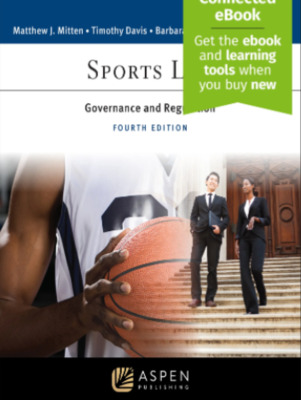
Jeremi Duru, Matthew J. Mitten, Timothy Davis, and Barbara Osborne
Four of the nation’s leading sports law scholars have merged their expertise to produce this problem-based sports law and governance text for undergraduate and graduate students. Drawing on their work developing the field’s leading sports law casebook for law students, the authors present this text in the traditional law school case method style, but with an eye toward accessibility for non-law students. Whether students are interested in careers in professional or amateur sports law, this text will equip them with the foundational knowledge necessary to identify legal issues, minimize risk, and become a generation of problem solvers within the sports industry. Contracts, torts, agency, labor and employment, racial and gender equity, antitrust, and intellectual property law are all addressed, as are health and safety issues and high school, college, and international/Olympic/regulatory concerns. Moreover, the text explores the sports industry with an appreciation of its dynamism, examining topics from cutting edge issues in athlete representation to the uncertain future of big-time intercollegiate athletics. Sports Law: Governance and Regulation (Fourth Edition) is a must for undergraduate and graduate students interested in the sports industry.
-
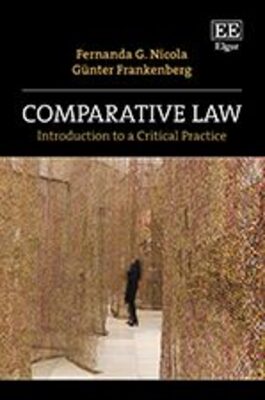
Fernanda Giorgia Nicola Dr. and Gunter Frankenberg
This book provides a practical introductory guide to comparative law. Fernanda G. Nicola and Günter Frankenberg present and examine conventional and critical approaches to legal comparison, exploring its ramifications in the field and political effects.
-
Ira P. Robbins
Discusses the standards developed by the courts, together with pertinent statutes and leading case law for every jurisdiction. Examines the law's historical development and the current law. Also addresses the departures from previous law and practice. Analyzes habeas corpus themes, patterns, and directions for current and future litigation. This guide provides the actual language of the court with complete citations to aid in further research.
-
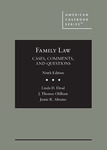
Jamie Abrams, Linda D. Elrod, and J. Thomas Oldham
The Ninth Edition of this popular and manageably sized casebook retains the general structure of the prior edition, with its emphasis on practical skills, comparative material, and diverse geographic coverage. This edition features transformative updates in the field, such as Dobbs v. Jackson Women’s Health Org., the 2017 Uniform Parentage Act, systemic critiques of the child welfare system, the Uniform Cohabitants’ Economic Remedies Act, and the regulation of assisted reproductive technologies.
The goal of this edition is to meet the needs of students preparing for the evolving practice of family law. Problems reflect current, diverse, and pluralistic family formation grounded squarely in supporting students acquiring “bread and butter” lawyering skills. The text invites students to consider the various skills now needed by a family law attorney, the emotional landscape facing many clients, the differing roles lawyers can play, the cultural competencies needed for practice, and the diverse skills needed to practice family law. These revisions support the trajectory shift toward professional-identity-formation in legal education and NextGen Bar.
-
Jamie Abrams, Daniela Kraiem, and Anibal Rosario Lebron
Gender and the Law is the new title for our long-running Women and the Law publication. Gender and the Law provides timely coverage highlighting the most pressing legal questions in the realm of gender and law. Assembled by a team of expert editors, this work collects the best research addressing legal issues affecting women, the law and masculinities, gender identity and expression, and sexuality published within the last year.
With timely coverage from top legal scholars of both “hot” topics and legal questions with a long history, this text allows practitioners to quickly get up to date and identify trends in a broad range of fields in this fast-changing area of the law Articles explore the relationship between gender and the following areas of law.
-
Walter Effross
Keeping Your Own Counsel: Simple Strategies and Secrets for Success in Law School, by Professor Walter A. Effross, is a unique toolkit of practical systems, schedules, and scores of (sometimes-surprising) suggestions, to help students distinguish themselves in the classroom, the exam room, and the interview room.
Drawing on the author’s seven years of big-firm practice and quarter-century of full-time law teaching, the book provides encouraging and immediately-usable methods to support students throughout their law school careers, starting well before the first day of classes. Keeping Your Own Counsel includes structures for mastering information, maximizing efficiency, minimizing stress, and building a portfolio of publications.
-
Roger Fairfax, Bennett Capers, and Eric Miller
-
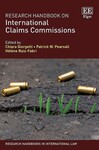
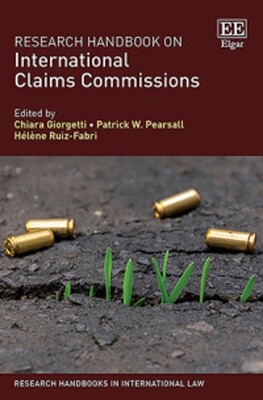
Chiara Giorgetti
International claims commissions (ICCs) are unique dispute resolution mechanisms designed to be highly flexible and responsive to international crises. This timely Research Handbook explores the history of ICCs, how and why states create them, and the role of states and secretariats within them.
Written by accomplished experts and past claims commission members to present a unique perspective on ICCs, this Research Handbook analyses past claims commissions including the Iran–US Claims Tribunal, the UN Compensation Commission, the Eritrea–Ethiopia Claims Commission and the Commission for Real Property Claims in Bosnia. Providing a comprehensive review of institutional design issues, this Handbook examines the challenges associated with mass claims processes, diplomatic protection, domestic liability, and enforcement, as well as how to address them. Looking ahead to the future, the contributing authors propose innovative ways in which claims commissions could be used to address contemporary challenges such as the Russian invasion of Ukraine, the construction of the wall in Occupied Palestinian Territory, climate change and environmental law disputes.
This thought-provoking Research Handbook will be a fundamental research resource for scholars and students of public international law and international dispute resolution. It will also provide practical advice for international arbitration experts, policy makers, and officials in international organisations.
-
Ira P. Robbins
Discusses the standards developed by the courts, together with pertinent statutes and leading case law for every jurisdiction. Examines the law's historical development and the current law. Also addresses the departures from previous law and practice. Analyzes habeas corpus themes, patterns, and directions for current and future litigation. This guide provides the actual language of the court with complete citations to aid in further research.
-
Ira P. Robbins
Prisoners and the Law focuses on legal issues commonly affecting the prison population, including AIDS, drugs, overcrowding, security, appeals, weapons, correspondence, visitation issues, and prisoner safety. In-depth articles, written by leading authorities, cover topics such as:
• The future of prison reform
• Restitution
• Proposals for a new correctional system
• Inmate welfare funds
• Prisoner, prison, probation, and parole statistics
• Incisive articles, written by some of the nation's leading authorities, on the development and present status of this evolving area of law
• The most recent changes and developments in the field
Use this title as a resource for issues relating to private incarceration, disenfranchisement of ex-felons, deaf prisoners' rights, and other legal challenges. Statistics on prisoners, prisons, probation, and parole are included.
Printing is not supported at the primary Gallery Thumbnail page. Please first navigate to a specific Image before printing.