
-
Nicholas Kittrie
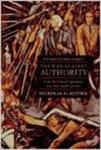
The Cold War is over and a New World Order is supposed to have begun. Yet the world has perversely avoided the "broad, sunlit uplands of peace" hoped for by Winston Churchill. Ethnic, religious, and civil strife continues to erupt around the world, played out in the mass media with unprecedented immediacy and horror. As fears of global apocalypse fade, the struggle between the forces upholding "authority" and those clamoring for "autonomy" breaks out anew on the national and sub-national stages. Not only the nation and the state, but also the church, the family, the school and the workplace, are reeling under the lash of dissent, opposition, and rebellion--often appearing on the verge of collapse.
In The War Against Authority, his most provocative work to date, eminent political, legal, and historical scholar Nicholas N. Kittrie explores the causes of escalating worldwide racial, cultural, political and social discontent. He goes beyond facile and traditional explanations such as population explosion, environmental abuse, ancient rivalries or the clash of civilizations. Instead, Kittrie points to a long predicted "crisis of legitimacy," a force that erodes the underpinnings of society and public confidence in its institutions.
With dramatic historical sweep and unblinking contemporary focus, Kittrie highlights the quest by those out of power to share in society's benefits, and by rulers to gain and maintain the acquiescence of their underlings. The cast of players in Kittrie'sbook is as diverse as history itself: Socrates and Brutus, Robert E. Lee and John Brown, Martin Luther King and Susan B. Anthony, Vladimir Lenin and Mao-Tsetung, Lee Harvey Oswald and Sirhan Sirhan. Their means and causes are just as varied: abolition and slavery, public order and individual conscience, abortion and the right to life, the bomb and the leaflet, freedom fighting and terrorism, communal conciliation and genocide, fundamentalism and heresy, conformity and civil disobedience, tribalism and multiculturalism.
Kittrie shows how the recent scramble between the Republican "Contract with America" and the Democratic "New Covenant" is simply an attempt to reclaim political legitimacy--different and contrasting efforts to recapture the essence of the "American Dream." The ongoing process to rewrite, in a form acceptable to new generations, this country's "social contract" (modifying and implementing a Constitution signed in Philadelphia over two hundred years ago) is mirrored across the globe. Constitution writing and similar efforts at institution and consensus building are vigorously under way throughout the world, clearly pointing to a need to prop up the legitimacy of authority in this pluralistic post-totalitarian era.
The War Against Authority is not another fin de siecle documentation of chaos and the world's woes. It offers workable solutions, useful methods for governments and individuals to redefine their identities and restore the legitimacy of authority. Kittrie proposes creative, responsive and pluralistic systems of power-sharing and justice. He calls for a new national and worldorder, committed to the richness of human diversity, the power of the person over government, and the ultimate accountability of all power. As Kittrie reiterates: "Perhaps history is nothing more than the struggle between different concepts of authority."
-
Jamin B. Raskin and John Bonifaz
-
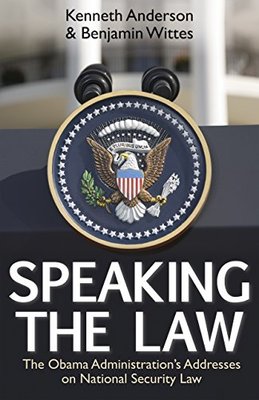
Kenneth Anderson and Helsinki Watch Committee
-
Padideh Ala'i
“Financial Institutions Reform Recovery and Enforcement Act of 1989: A Legal Summary and Analysis” (Co-author), published by Jones, Day, Reavis & Pogue (1989).
-
Kenneth Anderson
-
Kenneth Anderson
-
David E. Aaronson
-
David Aaronson and Rita Simon
"No area of criminal law has been the subject of more controversy than the insanity defense. The Insanity Defense is a clear assessment of this issue as it exists in the 1980s. It provides the reader with a basis for understanding and evaluating the legislative and judicial responses to the factors that have stirred this controversy. Because extremely complex issues are involved in the effort to formulate an insanity defense, Simon and Aaronson begin with a detailed historical overview. They discuss the necessity of expert witnesses in the actual trial and probe into the jury's role and responsibility. The authors describe the various movements that have been used to abolish the insanity defense, as well as assess the use and interpretation of the defense in other nations."
-
David Aaronson and Rita Simon
The jury's decision in John Hinckley's trial following his attempted assassination of President Reagan aroused controversy, protest, and a clamor for reform. However, an analysis of the history of the defense shows that its use is rare and largely noncontroversial. However, it receives enormous media attention, and the public is basically misinformed about its frequency of use. The response to the Hinckley decision has led to the enactment of a Federal statute on the legal criteria for the defense of insanity and of at least eight State laws defining verdicts of guilty but mentally ill. Future discussions of how to handle people who are mentally ill and violate the law should not discard the connection between responsibility and guilt and focus only on extracting revenge.
-
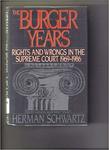
Herman Schwartz
"Explores Reagan's failure, despite his call for patriotism, to uphold the tenets of the Constitution and examines the impact of Reagan's failure to support social reform and his packing the Supreme Court with conservatives on America's future."
-
Ira Robbins
-
Ira Robbins
Sabbatical leaves have proven to be a useful concept for providing extended periods of time away from the job for individuals to pursue other needs or interests. The concept has spread from academic and religious institutions to business and industry, law firms, and government.
After surveying these analogies, this staff paper reviews the limited ways in which the concept has been applied to the judiciary. It then discusses the desirability and feasibility of extending judicial sabbaticals further, particularly to the federal judiciary. The principal virtues of such sabbaticals are that they have the potential to improve efficiency and productivity, enhance creativity and reflective powers, provide an opportunity for educational development and professional and personal growth, reduce stress, improve morale, attract a greater number of highly qualified individuals to the bench, decrease attrition (with its attendant costs), and put judges more in touch with the communities whose interests they serve.
Because of these possibilities, the staff paper concludes that sabbatical leaves for judges can be a valuable way to deal with some of the challenges that face the federal judiciary today.
-
Herman Schwartz
"Examines the impact on American law and society of the decisions reached during Warren Burger's term as Chief Justice of the Supreme Court."
-
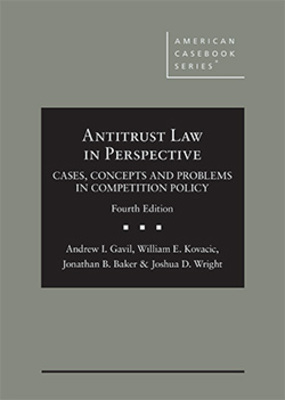
Jonathan Baker and William Blumenthal
The book is written along with Merger Standards Task Force Staf.
-
Jonathan Baker and Timothy Bresnahan
The book contains:The effect of private antitrust damage remedies on resource allocation; Insurance against product failure and moral hazard in the consumption of other goods; Estimating the elasticity of demand facing a single firm: evidence on three brewing firms / with Timothy F. Bresnahan
-
David Aaronson, C. Dienes, and Michael Musheno
"Part I presents a process-oriented perspective of public policy in which formal rules emerge, are implemented by various bureaucratic personnel (notably the police), and eventually impact society. Discretion is the key element that determines how the law affects society. Part II addresses the initial stage of the policy process, i.e., lawmaking. It examines the case for the decriminalization of various victimless crimes, explores the processes and politics of legal change, and identifies the link between formal decriminalization and its implementation. Goal formation in the decriminalization of public drunkenness is considered. Part III, which deals with the enforcement stage of the policymaking process, presents three case studies of police discretionary management of decriminalized public drunkenness in Washington, D.C.; St. Louis, Mo.; and Minneapolis, Minn. The focus is on the effect of bureaucratic discretion on the law's implementation. Part IV suggests how policymakers should manage police discretion to ensure the realization of particular public policy goals. Tools for managing police discretion include rules, incentives, and sanctions. Chapter notes, tabular data, and subject index."
-
David Aaronson, C. Dienes, and Michael Musheno
Printing is not supported at the primary Gallery Thumbnail page. Please first navigate to a specific Image before printing.